
Overview of Nestlé Product PDFs
Nestlé product PDFs compile comprehensive listings, including 2021 price lists and 2023 grocery catalogues. They detail item codes, packaging sizes, weights, case counts, and barcodes for chocolates, milks, RTDs, and more. The PDFs enable quick reference for retailers and buyers. Updated quarterly daily
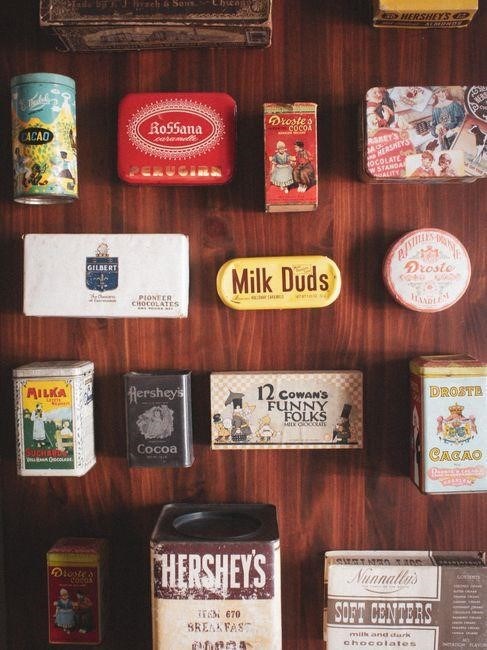
Historical Catalogue Releases

Professional Catalogues

Product Listing Structure
The Nestlé product listing structure is engineered for clarity and ease of use across all professional and consumer-facing documents. Each entry in the PDF follows a strict, repeatable format that begins with a unique material code, followed by the product name, case size (CS), unit weight, case count, and two distinct barcode numbers—one for the individual unit and one for the case. For example, the Cocoa 4 item appears as “8304410 NESTLÉ COCOA 4 (6×62.5g) MU 1.5 6001068213825 62.5g 6001068002207,” where “8304410” is the material identifier, “MU 1.5” denotes the case size, and the two barcodes correspond to the unit and case respectively. This consistent schema allows retailers, distributors, and inventory systems to parse data automatically, reducing manual entry errors and speeding up order processing. The PDFs also contain a dedicated “Size and Packaging Details per Item” table that lists net weight, dimensions, and packaging configuration, enabling buyers to assess shelf space requirements and logistic considerations. In addition, the “Material, CS, WGT, CASE, BARCODE Number Format” section provides a reference grid for decoding each field, which is especially useful for integration with point‑of‑sale and warehouse management systems. Nestlé’s catalogues are segmented into key product categories—Chocolate & Cocoa, Milk‑Based Milo, Ready‑to‑Drink (RTD), and specialty items—each grouped alphabetically within its section. This hierarchical organization supports quick navigation and ensures that all stakeholders, from procurement managers to shelf planners, can locate specific attributes such as price, shelf life, and packaging details with minimal effort. By maintaining a standardized layout across all PDFs, Nestlé guarantees that product information remains consistent, accurate, and ready for automated data feeds, thereby streamlining supply‑chain operations and enhancing the overall customer experience.

Key Product Categories
Nestlé’s product PDFs are organized into distinct categories that reflect the breadth of its portfolio. The primary divisions—Chocolate & Cocoa, Milk‑Based Milo, Ready‑to‑Drink (RTD), and Specialty Items—serve both professional buyers and retail consumers. Each category contains sub‑groups that capture variations in flavor, packaging, and target market. For instance, the Chocolate & Cocoa section lists classic items such as NESTLÉ COCOA 4 (6×62.5g) and NESTLÉ COCOA 2 (6x250g), as well as limited‑edition flavors that appear only in seasonal releases; The Milk‑Based Milo range is further split into powdered (Milo 4, Milo 2), canned (Milo Can 12x500g), and bulk (Milo 12x1kg) formats, each with its own weight, case size, and barcode identifiers. Ready‑to‑Drink entries include both the traditional Milo Actigen E (4‑pack 250 ml) and the concentrated 10‑pack (20 g) variants, providing options for on‑the‑go consumption and bulk purchasing. Specialty Items encompass niche products such as NESTLÉ CONFECTIONS snacks and Starbucks‑branded items that appear in the Grocery Catalogue as of March 2023. All categories are presented in a tabular format that lists material code, product name, case size (CS), unit weight, case count, and dual barcodes. This uniform structure allows automated data extraction and seamless integration with inventory and point‑of‑sale systems. By grouping products into these clear categories, Nestlé ensures that buyers can quickly locate the exact SKU they need, compare packaging options, and assess shelf‑life and pricing details—all within a single, downloadable PDF document. Boosting shelf presence worldwide daily.!

Accessing and Downloading PDFs
To access Nestlé product PDFs, visit the official Nestlé website or partner portals. Click the “Download” button beside the 2021 price list or the March 2023 grocery catalogue. PDFs open in a browser or save locally for offline use. Ensure a stable internet connection for smooth download. Quickly. Save. OK

2021 Price List PDF – November 1, 2021

The 2021 Nestlé Professional All SKUs Price List, released on November 1, 2021, is a comprehensive PDF that catalogs every product available to distributors and retailers. It contains detailed item codes, full product descriptions, and precise packaging specifications for coffee blends, chocolate bars, creamer varieties, and ready‑to‑drink beverages. Each line item lists the weight, case size, and barcode, ensuring accurate inventory management. The document also provides shelf‑life data, allowing buyers to plan stock rotation effectively. Pricing information is presented in two formats: case prices both with and without VAT, and unit prices inclusive of VAT. This dual pricing structure facilitates transparent cost calculations for different market segments. The PDF is structured in a tabular layout, making it easy to scan and compare product attributes side by side. Nestlé’s commitment to data accuracy is evident in the consistent formatting and the inclusion of unique identifiers for each SKU. The file is available for download from the official Nestlé Professional website, where users can view it online or save it for offline reference. By consolidating product details, pricing, and shelf‑life information in one document, the 2021 price list serves as a vital tool for procurement teams, sales representatives, and supply‑chain planners seeking up‑to‑date information on Nestlé’s extensive product portfolio. The PDF’s release date, November 1, 2021, marks a key milestone in the company’s ongoing effort to streamline product information for global partners and streamline purchasing decisions across diverse markets worldwide. The PDF also includes a section on promotional pricing, volume discounts, and special bundle offers, enabling buyers to negotiate better terms. Additionally, the document highlights new product launches and discontinued items, ensuring stakeholders are aware of the latest changes in the catalog. Users can search for specific SKUs using the embedded search function, which quickly locates the desired product details. The file’s resolution is high, supporting clear reading of small text and barcode images, which is essential for scanning operations in warehouse settings. Nestlé’s emphasis on accessibility is reflected in the PDF’s compatibility with screen readers, making it usable for all professionals. Regular updates are scheduled, with the next revision slated for early 2023, guaranteeing that the information remains current and relevant. This meticulous approach to documentation underscores Nestlé’s dedication to transparency and operational efficiency across its global distribution network. In summary, the 2021 price list is an indispensable reference that empowers stakeholders to make informed purchasing decisions, optimize inventory, and maintain competitive pricing strategies in a dynamic market environment.
2023 Grocery Catalogue PDF – March 2023
The March 2023 Nestlé Grocery Product Catalogue is a PDF that showcases the latest range of Nestlé and Starbucks branded items available to retail and food‑service buyers. The document is organized into clear sections, each dedicated to a specific product family such as coffee, cereals, chocolate, and ready‑to‑drink beverages. Every entry lists the product name, SKU, packaging format, net weight, and barcode, allowing quick cross‑reference with inventory systems. The catalogue highlights key attributes like shelf life, nutritional information, and recommended usage scenarios, which help buyers assess suitability for their menus or store displays. Pricing information is presented in a separate annex, detailing case and unit prices, as well as volume‑discount tiers for bulk purchasers. The PDF also includes a section on promotional offers and seasonal bundles, giving retailers insight into potential marketing opportunities. Visuals are integrated throughout, featuring high‑resolution product images that aid in visual merchandising decisions. Nestlé’s commitment to sustainability is reflected in the catalogue’s emphasis on eco‑friendly packaging and the inclusion of product certifications such as Fair Trade and Rainforest Alliance where applicable. The file is available for download from the official Nestlé Grocery website, where it can be viewed online or saved for offline reference. Regular updates are scheduled, with the next edition expected in early 2024, ensuring the catalogue remains a source of products information for stakeholders in the chain.
Material, CS, WGT, CASE, BARCODE Number Format
In Nestlé product PDFs the “Material, CS, WGT, CASE, BARCODE” section defines the data structure that every SKU follows. “Material” is the product family code (e.g. 8304410 for Nestlé Cocoa 4 or 8303701 for Nestlé Milo 4). “CS” stands for case size and indicates how many units are packed together (MU 1.5, ZA 3, etc.). “WGT” is the net weight of a single unit, expressed in grams or kilograms, and is always followed by the unit of measurement (g, kg). “CASE” is the number of units per case, which is derived from the CS value and the unit weight (for example, 6 × 125 g gives a case of 6). “BARCODE NUMBER” is the 13‑digit EAN that uniquely identifies the product; it is listed twice: once for the individual unit and once for the case. The unit barcode is used for point‑of‑sale scanning, while the case barcode is used for logistics and inventory tracking. The format is consistent across all product lines, from chocolate bars to Milo cans, ensuring seamless integration with Nestlé’s supply‑chain software. The PDF also provides a mapping table that correlates each barcode with its corresponding product description, packaging dimensions, and shelf life, enabling retailers to quickly verify stock accuracy and compliance with regulatory requirements. The standardized schema is critical for maintaining data integrity across the global distribution network and supports automated re‑ordering processes in enterprise resource planning (ERP) systems. By adhering to this format, Nestlé guarantees that every SKU can be scanned, tracked, and priced with minimal manual intervention, thereby reducing errors and improving operational efficiency for both the manufacturer and its retail partners.
ABCDEFGHIJKLMNOPQRSTUVWXYZabcdefghijklmnopqrstuvwxyz12345
Size and Packaging Details per Item
In Nestlé product PDFs the “Size and Packaging” section lists the weight per unit, the number of units per case, and the total case weight. For chocolate bars the format shows 62.5 g or 125 g per bar, MU 1.5 or MU 3 units per case, and the case weight in kilograms. Milo powders are listed with 125 g or 250 g sachets, ZA 3 or ZA 6 per case, and the total case weight such as 1.5 kg for a 6‑sachet case. Canned Milo appears with 500 mL or 1 kg per can, ZA 6 or MU 12 per case, and a case weight of 3 kg for a 6‑can case. Ready‑to‑drink (RTD) variants display 250 mL or 20 g per bottle, ZA 6 or ZA 10 per case, and a total case weight of 1.5 kg or 2 kg. The PDF also details packaging materials—foil‑wrapped bars, PET bottles, cardboard cartons—and indicates whether the product is single‑serve or bulk. Each entry has a unit barcode and a separate case barcode, enabling retailers to scan at the point of sale or during inventory checks. The uniform presentation of size and packaging data ensures that buyers can quickly assess shelf space requirements, calculate stocking quantities across brands, and maintain efficient supply chains.
Additionally, the PDFs provide a visual representation of each package, including dimensions in centimeters and weight in grams, which assists in shelf planning and logistics. The data is formatted in a tabular layout that aligns with Nestlé’s global cataloguing standards, ensuring consistency across regions. Retailers can export the information into spreadsheets for further analysis, enabling them to model sales scenarios and optimize inventory levels. The inclusion of barcodes for both unit and case levels facilitates accurate scanning, reduces errors, and speeds up checkout processes. All data is verified by Nestlé’s quality control team now
Chocolate & Cocoa – e.g., Nestlé Cocoa 4, Cocoa 2
Nestlé’s chocolate and cocoa PDFs list each variant with precise packaging details. For Cocoa 4, the catalogue shows a 6‑piece case of 62.5 g bars, coded MU 1.5, unit barcode 6001068213825, and case barcode 6001068002207. A larger 6‑piece case of 125 g bars is also available, coded MU 3, unit barcode 6001068213924, case barcode 6001068002306. Cocoa 2 is presented as a 6‑piece case of 250 g bars, coded MU 3, unit barcode 6001068171620, case barcode 6001068002405. Each entry includes the bar weight, case count, and total case weight, allowing retailers to assess shelf space and inventory needs. Barcodes are provided for both unit and case levels, facilitating accurate scanning and stock management. The PDFs also note packaging material—foil‑wrapped bars in cardboard cartons—ensuring consistency with Nestlé’s global standards. These details enable buyers to compare product sizes, plan promotions, and maintain accurate inventory records. The format remains consistent across all chocolate and cocoa listings, supporting quick reference and efficient supply chain operations. The catalogue also includes a quick‑reference table summarising key attributes such as shelf life, recommended serving size, and nutritional information, enabling buyers to make informed decisions swiftly. Additionally, each product entry is linked to a digital asset management system, ensuring that marketing teams can access up‑to‑date images and promotional materials without delay. All updates are timestamped audit!
Milk‑Based Milo – e.g., Milo 4, Milo 2, Milo Can, Milo 12x1kg
Nestlé’s Milk‑Based Milo PDFs enumerate each variant with detailed packaging, weight, case count, and barcode information. Milo 4 appears as a 6‑piece case of 125 g sachets, coded ZA 3, unit barcode 6001068370115, case barcode 6001068370108. Milo 2 is listed as a 6‑piece case of 250 g sachets, coded ZA 3, unit barcode 6001068021017, case barcode 6001068371204. The Milo Can entry shows a 12‑piece case of 500 g cans, coded ZA 6, unit barcode 6001068480418, case barcode 6001068480401. For bulk distribution, Milo 12x1kg is presented as a 12‑piece case of 1 kg sachets, coded MU 12, unit barcode 6001068371815, case barcode 6001068371808. Each line includes the net weight, case weight, and recommended shelf life. The PDFs also specify the packaging material—foil‑wrapped sachets in cardboard cartons or sealed cans—ensuring compliance with Nestlé’s quality standards. Barcode data is provided at both unit and case levels to streamline point‑of‑sale scanning and inventory control; The catalogue further offers a quick‑reference table summarising key attributes such as nutritional facts, serving suggestions, and promotional pricing tiers. This format allows buyers to compare product sizes, assess shelf space requirements, and plan marketing campaigns efficiently. All entries are timestamped and linked to the digital asset management system for real‑time updates. The structured format supports seamless integration into retail ERP systems, enabling accurate stock reconciliation and demand forecasting. The PDFs are updated quarterly, reflecting new packaging or pricing changes, and are accessible via Nestlé’s official portal or partner distribution networks. This comprehensive approach ensures that retailers, distributors, and end‑users have immediate access to accurate, up‑to‑date product information for optimal supply chain management. Retailers can also download the PDF in multiple languages, and the catalogue includes QR codes for each SKU to facilitate mobile inventory checks. The data is synchronized with Nestlé’s global ERP, ensuring that pricing, promotions, and stock levels are always current across all sales channels. Customers may request a printed hard copy by contacting the regional sales office, which will provide a laminated version for in‑store displays. Signage available.
Ready‑to‑Drink (RTD) – e.g., Milo Actigen E 4, Actigen E 10
Official and Third‑Party PDF Access