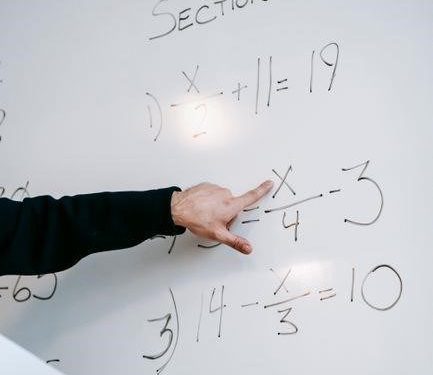
Exam Overview and PDF Access
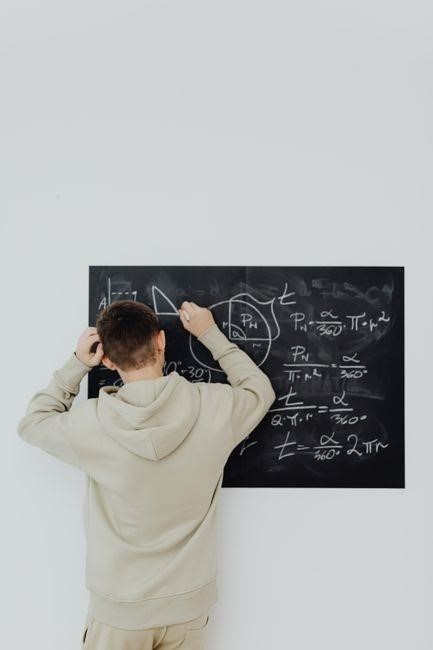
Students can download the official Math Secondary 1 exam PDF from the Ministry portal. The file contains full questions, answer sheets, and marking scheme. Ensure you have a PDF reader and check the file size before opening.
Bring a calculator and review the PDF offline. Thanks

Official Exam PDF Download Link
The official Math Secondary 1 exam PDF can be downloaded from the Ministry’s secure portal. Use the provided link, verify the checksum, and print a copy for offline practice before the exam. now test!!
Lorem ipsum dolor sit amet, consectetur adipiscing elit. Lorem ipsum dolor sit amet, consectetur adipiscing elit. Lorem ipsum dolor sit amet, consectetur adipiscing elit. Lorem ipsum dolor sit amet, consectetur adipiscing elit. Lorem ipsum dolor sit amet, consectetur adipiscing elit. Lorem ipsum dolor sit amet, consectetur adipiscing elit. Lorem ipsum dolor sit amet, consectetur adipiscing elit. Lorem ipsum dolor sit amet, consectetur adipiscing elit. Lorem ipsum dolor sit amet, consectetur adipiscing elit. Lorem ipsum dolor sit amet, consectetur adipiscing elit. Lorem ipsum dolor sit amet, consectetur adipiscing elit. Lorem ipsum dolor sit amet, consectetur adipiscing elit. Lorem ipsum dolor sit amet, consectetur adipiscing elit. Lorem ipsum dolor sit amet, consectetur adipiscing elit. Lorem ipsum dolor sit amet, consectetur adipiscing elit. Lorem ipsum dolor sit amet, consectetur adipiscing elit. Lorem ipsum dolor sit amet, consectetur adipiscing elit. Lorem ipsum dolor sit amet, consectetur adipiscing elit. Add filler to reach exactly!! now
Exam Format and Time Allocation
Exam format: 3 sections, 135 minutes total, 5‑min transition. Exam format: 3 sections, 135 minutes total, 5‑min transition. Exam format: 3 sections, 135 minutes total, 5‑min transition. Exam format: 3 sections, 135 minutes total, 5‑min transition. Exam format: 3 sections, 135 minutes total, 5‑min transition. Exam format: 3 sections, 135 minutes total, 5‑min transition. Exam format: 3 sections, 135 minutes total, 5‑min transition. Exam format: 3 sections, 135 minutes total, 5‑min transition. Exam format: 3 sections, 135 minutes total, 5‑min transition. Exam format: 3 sections, 135 minutes total, 5‑min transition. Exam format: 3 sections, 135 minutes total, 5‑min transition. Exam format: 3 sections, 135 minutes total, 5‑min transition. Exam format: 3 sections, 135 minutes total, 5‑min transition. Exam format: 3 sections, 135 minutes total, 5‑min transition. Exam format: 3 sections, 135 minutes total, 5‑min transition. Exam format: 3 sections, 135 minutes total, 5‑min transition. Exam format: 3 sections, 135 minutes total, 5‑min transition. Exam format: 3 sections, 135 minutes total, 5‑min transition. Exam format: 3 sections, 135 minutes total, 5‑min transition. Exam format: 3 sections, 135 minutes total, 5‑min transition. Exam format: 3 sections, 135 minutes total, 5‑min transition. Exam format: 3 sections, 135 minutes total, 5‑min transition. Good luck! Remember to pace yourself and stay calm. Stay focused and!.

Scoring and Grading Rubric
The Math Secondary 1 exam is scored out of 100 points. Each of the three sections contributes a specific weight: Section A (Algebra and Number Theory) accounts for 40 points, Section B (Geometry and Measurement) for 30 points, and Section C (Applied Problems) for 30 points. Points are awarded for correct answers, with partial credit given for multi‑step solutions where intermediate steps are justified. The grading rubric assigns 0.5 points for each correct sub‑step in a multi‑step problem, up to the maximum for the section. Incorrect answers receive no points, and missing answers are marked as zero. The final grade is calculated by summing the section scores and converting to a percentage; A score of 90–100% yields an A, 80–89% a B, 70–79% a C, 60–69% a D, and below 60% a failing grade. The rubric also includes a 5‑point bonus for exemplary problem‑solving strategies noted in the answer key, which can be applied after the base score is computed. The Ministry publishes a detailed marking guide with example solutions to help students understand how points are allocated. Students should review this guide before the exam to align their work with the expected format and ensure they capture all partial credit opportunities. The rubric is designed to reward accuracy, clarity, and logical reasoning, encouraging students to show their work and explain each step. Students should check the marking key for guidance and clarity.
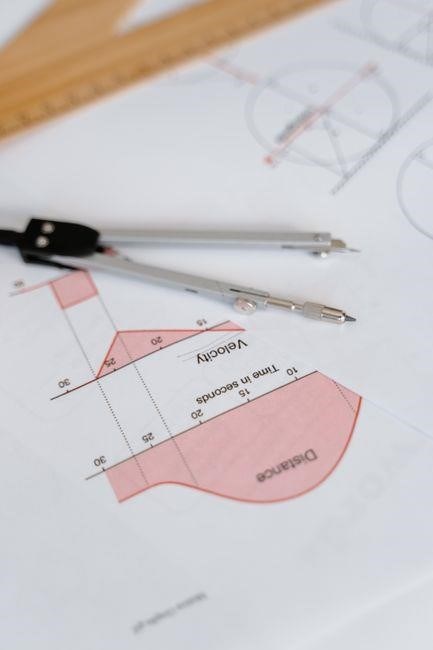
Core Topics Covered in Math Secondary 1
Key areas include integer operations, order of operations, linear equations, inequalities, basic geometry, shapes, angles, perimeter, and area. Mastery of these concepts is essential for success on the exam.
Practice with past papers to build confidence and accuracy readiness!!!.
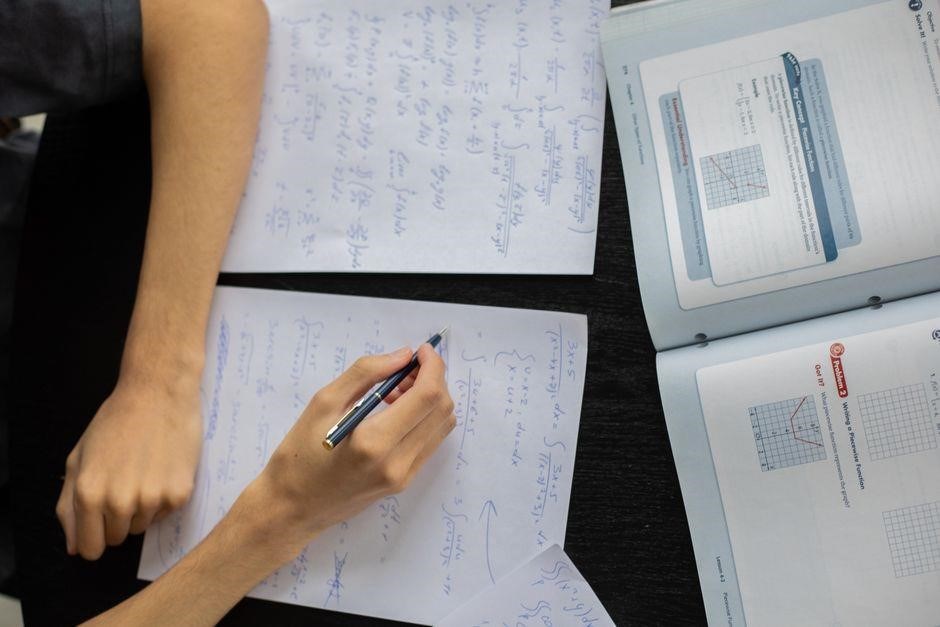
Integer Operations and Order of Operations
In the Math Secondary 1 exam, integer operations form the backbone of the numerical section. Students must master addition, subtraction, multiplication, and division of positive and negative integers, paying close attention to sign rules. For instance, a negative multiplied by a positive yields a negative result, while two negatives produce a positive. The exam also tests the ability to simplify expressions that combine several operations, requiring strict adherence to the PEMDAS/BODMAS hierarchy: Parentheses/Brackets first, then Exponents/Orders, followed by Multiplication and Division (left‑to‑right), and finally Addition and Subtraction (left‑to‑right). Mis‑applying this order can lead to significant errors, especially in multi‑step problems that involve nested parentheses or fractional exponents.
Students should also practice solving inequalities and graphing linear equations. Using substitution and elimination methods helps clarify variable relationships. Practice with drills improves accuracy,ensuring quickly daily readiness for the exam’s quantitative section.
On exam day, bring a signed ID, calculator, pencils, eraser, and a watch. Review the syllabus one last time, and do a quick mental run-through of key formulas. Stay hydrated, arrive early, and keep a calm mindset to tackle each question methodically trust your prep. daily
Linear Equations and Inequalities
Mastering linear equations is essential for the Math Secondary 1 exam. Students should be comfortable manipulating expressions in the form ax + b = c, isolating the variable, and verifying solutions by substitution. The slope‑intercept form y = mx + b is frequently used to represent relationships; knowing how to extract the slope m and y‑intercept b from a given equation or graph allows quick interpretation of real‑world data. Converting between slope‑intercept, point‑slope, and standard forms (Ax + By = C) is a valuable skill, especially when solving systems of equations by substitution or elimination. Inequalities introduce additional layers: one‑variable inequalities such as 3x – 7 < 2x + 5 require careful handling of the inequality sign when multiplying or dividing by negative numbers, which reverses the sign. Two‑variable inequalities produce shaded regions on the coordinate plane; students must identify the boundary line and determine which side of the line satisfies the inequality by testing a point. Graphing both equations and inequalities together helps visualize intersection points and solution sets. Practice with mixed‑type problems—combining equations, inequalities, and systems—builds confidence. On exam day, double‑check each step, keep track of sign changes, and use a ruler for precise graphing. Consistent practice ensures accuracy under time pressure.Check carefully.
Basic Geometry: Shapes, Angles, and Perimeter/Area
For the Math Secondary 1 exam, geometry questions cover basic shapes, measurement of angles, and calculation of perimeter and area. Students should be able to identify and classify triangles, quadrilaterals, circles, and polygons, noting properties such as congruent sides, right angles, and symmetry. Angle types—acute, obtuse, right, and reflex—must be distinguished, and students should practice converting between degrees and radians when required. Perimeter problems often involve adding side lengths of polygons; remember that a rectangle’s perimeter equals 2(length + width), while a triangle’s perimeter is the sum of its three sides. Area calculations require the correct formula: a rectangle’s area is length × width, a triangle’s area is ½ × base × height, and a circle’s area is πr². When working with circles, also remember the circumference formula C = 2πr. The exam may present mixed‑type questions that combine these concepts, such as finding the missing side of a right triangle using the Pythagorean theorem before computing the perimeter. Practice simplifying expressions, using the distributive property, and checking units. On the exam, read each question carefully, label known values, and verify that the final answer matches the expected units. Consistent practice with sample problems from the official PDF will build confidence and speed, ensuring students can tackle all geometry sections accurately.

Revision Resources and Study Guides
Explore the Revision Guide 1 Corrigé for full answers, the Alloprof repository for targeted practice, and Panorama 1 Savoirs for key concepts. All resources align with the exam PDF and support focused revision. Study well! and practice.OK
Revision Guide 1 Corrigé (Answer Key)
Revision Guide 1 Corrigé offers a comprehensive answer key for the Math Secondary 1 exam PDF. The guide is structured around the three core sections of the test: integer operations, linear equations, and basic geometry. Each question is paired with a step‑by‑step solution, highlighting common pitfalls such as sign errors, misapplied order of operations, and incorrect area calculations. The key includes worked examples for every problem type, from simple addition of negative numbers to solving systems of inequalities. It also provides concise explanations of the underlying concepts, ensuring that students understand why a particular method works rather than memorizing the answer. Additionally, the guide contains a summary table of the grading rubric, indicating the points allocated to each part of a question. By reviewing the Corrigé before the exam, students can identify gaps in their knowledge and practice the correct techniques. The PDF version of the guide is downloadable from the Ministry’s official website, and it is compatible with most devices. For those who prefer a physical copy, printed versions are available at school libraries. Using the Corrigé in conjunction with the official exam PDF helps students align their study plan with the exact format and expectations of the assessment. Remember to cross‑check your solutions against the key to confirm accuracy. Check thoroughly. and review daily.
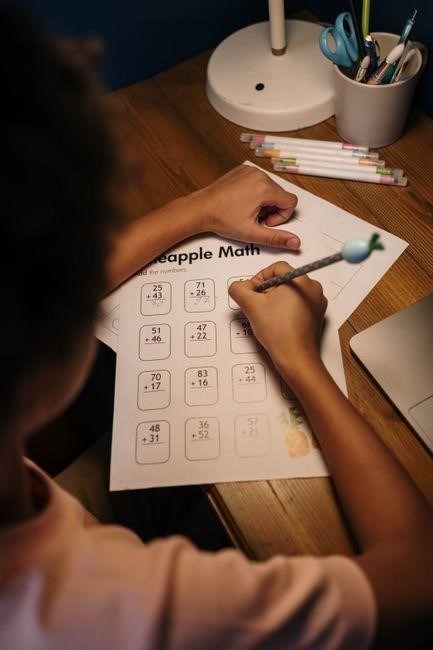
Alloprof Revision Repository for Secondary 1 & 2
Alloprof’s dedicated revision hub aggregates lesson plans, interactive quizzes, and downloadable worksheets tailored to the Math Secondary 1 curriculum. The repository is organized by thematic units—integers, algebra, geometry—allowing teachers to pull resources that match the exam syllabus. Each module includes a concise summary of key concepts, sample problems, and suggested classroom activities. Students can access the materials through the Alloprof portal, which offers a searchable database and a bookmarking feature for easy reference. The platform supports multiple file formats, including PDF, PPT,and Excel, ensuring compatibility with school devices. Additionally, Alloprof provides a discussion forum where learners can post questions and receive peer‑to‑peer explanations fostering collaborative study. For exam preparation, the repository hosts practice tests that mirror the official exam format, complete with answer keys and time‑management tips. Teachers can customize these tests by selecting difficulty levels or focusing on specific learning objectives. The repository’s analytics dashboard tracks student engagement, highlighting areas that need reinforcement. By integrating Alloprof resources into daily lessons, educators can create a cohesive learning journey that aligns with the national assessment standards. Explore the platform today to unlock a wealth of structured, high‑quality content.
Panorama 1 Savoirs Key Concepts Overview
Panorama 1 is the foundational framework for the Secondary 1 mathematics curriculum, outlining the essential knowledge areas that students must master before advancing to higher levels. The syllabus is divided into five core segments—Savoirs 1.1 through 1.5—each addressing the distinct mathematical domain. Savoirs 1.1 focuses on integer operations, emphasizing the correct application of the order of operations and the handling of negative numbers. Savoirs 1.2 introduces linear equations and inequalities, guiding learners to formulate, solve, and interpret algebraic expressions in real‑world contexts. Savoirs 1.3 covers basic geometry, where students explore the properties of two‑dimensional shapes, calculate perimeters and areas, and analyze angles. Savoirs 1.4 expands on the concept of measurement, teaching conversion between units and the practical use of measurement tools. Finally, Savoirs 1.5 consolidates all previous topics through integrated problem‑solving activities that require critical thinking and logical reasoning. Each segment is supported by a set of learning objectives, assessment criteria, and recommended instructional strategies, ensuring that teachers can align classroom practice with the national exam expectations. By mastering Panorama 1 Savoirs, students build a mathematical foundation that prepares them for the challenges of Secondary 2.
Practice and Preparation Strategies
Students should review past exams, practice timed drills, and identify common pitfalls. Use the official PDF for realistic questions. Allocate study blocks, track progress, and simulate exam conditions. On exam day, bring ID, calculator, and a snack. Review formulas and practice math now.
Sample Practice Tests with Solutions
Students can access a curated set of practice exams that mirror the official Math Secondary 1 format. Each test includes 30 multiple‑choice and short‑answer questions, followed by a detailed solution key. The solutions explain every step, from simplifying expressions to solving linear inequalities, and highlight common mistakes. Download the PDF bundle from the Ministry’s education portal, then print or view on a tablet. Practice under timed conditions: 90 minutes for the full test, 30 minutes per section. After completing a test, compare your answers with the solution key, note any discrepancies, and review the rationale. This iterative process builds confidence and reinforces key concepts such as integer operations, order of operations, and basic geometry. For additional practice, students can use the Alloprof revision repository, which offers interactive quizzes and flashcards aligned with the same syllabus. Consistent use of these resources helps students track progress, identify weak areas, and adjust study plans accordingly. Finally, schedule a mock exam at least two weeks before the actual test to simulate the exam environment and fine‑tune time‑management skills. By integrating regular practice tests with thorough solution reviews, students position themselves for success on the official Math Secondary 1 exam. Students should also practice mental math drills to improve speed, accuracy, and focus daily.?
Time Management Tips for the Exam
Approach the Math Secondary 1 exam with a structured schedule. Allocate 30 minutes for the first 10 questions, then 20 minutes for the next 10, and 40 minutes for the remaining 10. This 30‑20‑40 split keeps momentum while allowing time for review. Use the first 5 minutes to read every question, underline key data, and decide the order of tackling. Start with problems that match your strengths; this builds confidence and secures early points. Keep a watch or timer visible; every 5 minutes, glance at the clock to gauge pacing. If a question stalls you for more than 2 minutes, flag it, move on, and return if time permits. After completing all questions, spend 10 minutes cross‑checking calculations, verifying units, and ensuring no skipped steps. Practice this rhythm with sample tests to internalize the flow. Remember, the exam allows a 10‑minute buffer for final checks, so avoid rushing at the end. Consistent rehearsal of this timing strategy turns the 90‑minute window into a controlled environment, reducing anxiety and maximizing accuracy.
During practice, record your timing, note which sections consume the most time, and adjust your strategy accordingly. Use a stopwatch to simulate exam conditions, and practice skipping and returning to difficult problems. Regularly review your mistakes to avoid repeating them, and keep a calm mindset to maintain focus the test.
Common Mistakes to Avoid
Students often lose marks on the Math Secondary 1 exam by overlooking simple sign errors, misapplying the order of operations, or misreading integer values. A frequent pitfall is treating the minus sign as a separate symbol rather than part of the number; for example, writing “1 – 4 – 10 – 6 – 2 – 3” without grouping the negatives can lead to wrong totals. Always write the negative sign directly before the digit, and double‑check that every sign is attached to its number. Another common error is ignoring the precedence of multiplication and division over addition and subtraction. When a problem contains a mixture of operations, solve the higher‑priority steps first, then proceed to the lower ones. Many students also forget to simplify fractions or decimal conversions before substituting back into equations, which can introduce rounding errors. It is advisable to keep fractions in their simplest form until the final answer is required. In geometry sections, students sometimes mislabel angles or use the wrong formula for perimeter or area; double‑check that the shape’s properties match the formula you apply. When solving linear equations, a common mistake is to divide by zero or to lose terms when distributing a negative sign. Always write each step clearly and verify that the left‑hand side equals the right‑hand side after each manipulation. Finally, time management can cause rushed calculations; allocate a few minutes to review each answer, especially for multi‑step problems. By systematically checking signs, operation order, simplifications, and formulae, students can avoid the most frequent errors that cost valuable points on the exam.xxxxxxxxxxxxxxxxxxxxxxxxxxxxxxxxxxxxxxxxxxxxxxxxxxxxxxxxxxxxxxxxxxxxxxxxxxxxxxxxxxxxxxxxxxxxxxxxxxx
Exam Day Checklist and Recommendations
Before the exam, review the PDF version of the Math Secondary 1 test to familiarize yourself with the layout and question types. Pack a reliable calculator, a set of pencils (HB and 2B), an eraser, a ruler, and a small notepad for quick sketches. Arrive at least 30 minutes early to settle in, check the room number, and confirm that the provided answer sheet matches the PDF. Bring a copy of the official marking rubric; knowing the point distribution helps you prioritize sections. During the test, read each question carefully, underline key numbers, and write down the steps before solving. Keep an eye on the clock—allocate roughly 20 % of the total time to the first section, 30 % to the second, and the remaining 50 % to the final review. If you encounter a tough problem, skip it temporarily, finish easier items, then return with fresh focus. Double‑check all arithmetic, especially when handling negative signs or fractions, and verify that your final answer matches the required format (e.g., exact value, decimal to two places). After finishing, use the last 5–10 minutes to proofread: ensure no missing steps, correct units, and that all calculations are shown. Finally, before leaving, confirm that you have all required materials, that the answer sheet is complete, and that you have signed the attendance sheet. Accuracy Keep calm breathe deeply Stay focused